
Contributed by Stephanie Weatherly, DNP, PMH RN-BC, FACHE
Psychiatric Medical Care/Senior Life Solutions Chief Clinical Officer
To honor Week Four of Suicide Prevention & Awareness Month, we are highlighting the need for support for those struggling and some of the factors that may put someone at higher risk for attempting suicide.
The U.S. Department of Health and Human Services released data on the first month of the Suicide and Crisis Hotline’s transition to the phone number of “988.” The data showed a 45% increase in call volume and a reduction in call wait times from the previous year. This equates to an increase of 152,000 more calls or contacts than in August of 2021. The hotline also reduced the amount of time people are waiting for someone to connect from 2.5 minutes to 42 seconds.
With the World Health Organization predicting the continued rise of death by suicide over the next decade, the improved access to support for those at suicide risk is significant. Better access to a call center and reduced wait times translates into more individuals receiving help and a reduction in suicide risk.
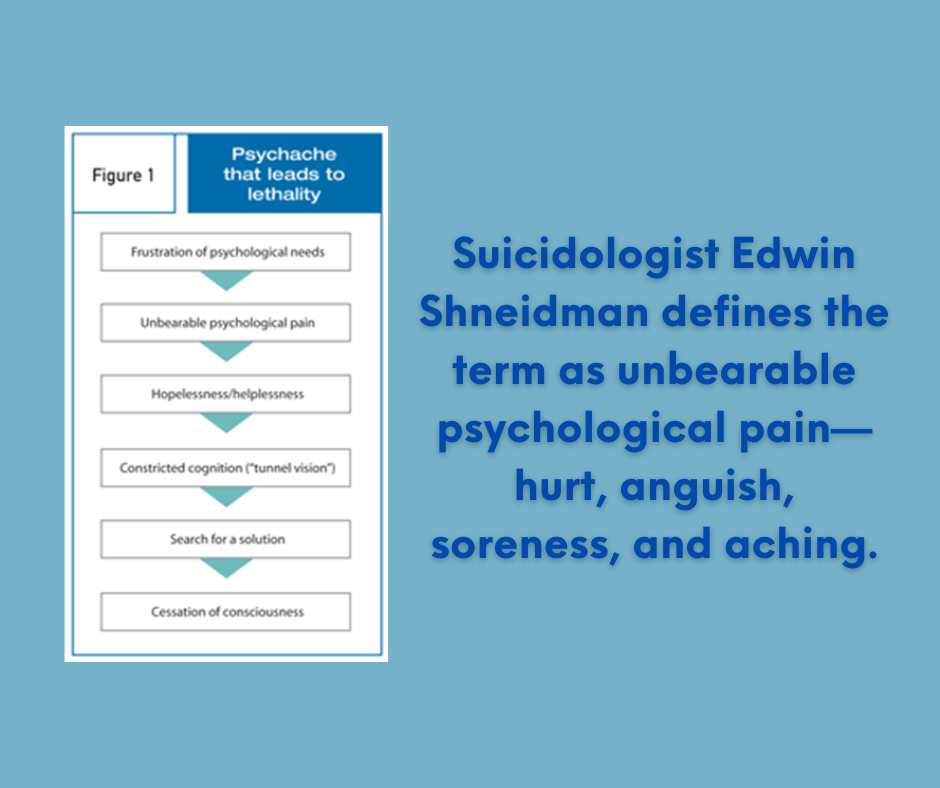
To prevent death by suicide, we need to understand the complex factors that increase a person’s risk for attempting suicide. One of the most recognized indicators of suicide risk is psychache. Suicidologist Edwin Shneidman defines the term as unbearable psychological pain—hurt, anguish, soreness, and aching.
According to Shneidman, suicide is best understood as moving toward the complete stopping of one’s consciousness and unendurable pain as the solution to life’s painful and pressing problems. “Pain is the core of suicide. Suicide is an exclusively human response to extreme psychological pain.”
As seen in Figure 1, the path from psychache to death by suicide has areas where we can intervene, provide support, and hopefully break this pathway of lethality.
Following psychache, other psychological factors like personality traits, emotional characteristics, and dysregulation play a role with emerging importance to decision-making deficit among suicidal individuals.
Next week, we will discuss interpersonal factors and their role as a psychological factor for suicide risk.
Remember, Senior Life Solutions is Excelsior Springs Hospital’s program, designed to meet the unique needs of individuals typically 65 and older experiencing depression or anxiety related to life changes that are often associated with aging. If you or someone you know is struggling with a decline in your mental health, our program wants you to know we are here to help. Whether through our program, or another service, our team works to identify and address the emotional needs of those in our community and provide support.
If you need more information or education or would like to discuss support, please call 816-629-2629 or visit Senior Life Solutions – Excelsior Springs Hospital (eshospital.org).