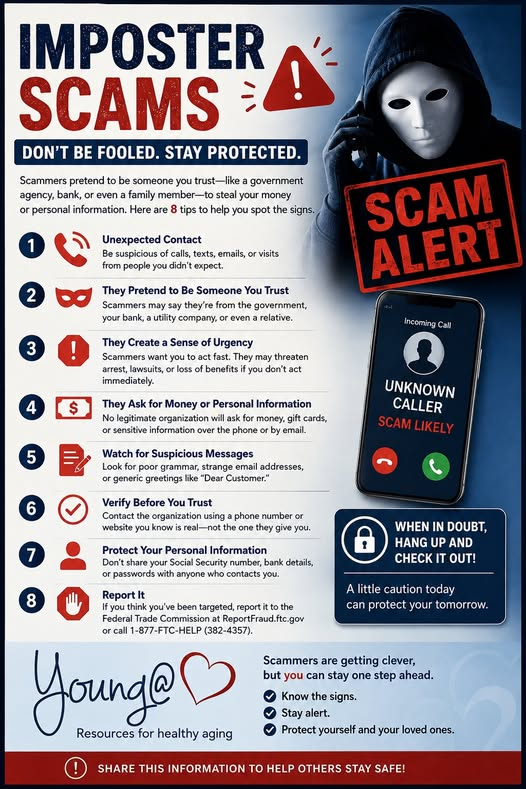
Scammers may pretend to be someone you trust—your bank, Medicare, a government agency, a business, or even a family member.
 Red flags to watch for:
• Unexpected calls, texts, or emails
• Pressure to act immediately
• Requests for gift cards, cryptocurrency, or money
• Requests for Medicare, Social Security, or bank information
• Threats of arrest, account closure, or loss of benefits
• Someone telling you to keep the situation secret
 STOP. PAUSE. VERIFY.
Don’t trust caller ID. Contact the person or organization directly using a phone number or website you know is legitimate.
If something feels “off,” hang up and check it out!
 Share this post with family and friends to help protect others from scams.
Learn more about spotting imposter scams from the National Council on Aging:
NCOA: 8 Tips to Help You Spot Imposter Scams
#ImposterScams#ScamPrevention#FraudPrevention#SeniorSafety#YoungAtHeartResources